New Delhi:
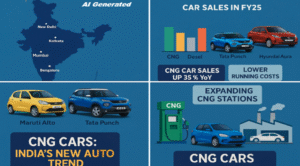
For the first time in India’s automotive history, CNG car sales have surpassed diesel cars in FY25, marking a major shift in consumer preference and market trends. According to data from Vahan, a total of 787,724 CNG vehicles were sold compared to 736,508 diesel vehicles during this period, reflecting a massive 35% year-on-year increase in CNG car sales.
The steady rise in petrol and diesel prices, improved CNG refuelling infrastructure, and the lower running cost of CNG vehicles have played a crucial role in this market transformation. Meanwhile, diesel car sales only rose by 5%, and petrol car sales actually fell by 7%, indicating a clear shift in consumer preference.
Why are Indian Buyers Choosing CNG Cars?
Fuel cost has become a major concern for Indian car owners. CNG cars offer a significant advantage with running costs of just ₹3-4 per kilometre, much lower than petrol or diesel counterparts. Moreover, the Indian government’s aggressive push to expand CNG infrastructure—planning to grow the number of CNG stations from 7,500 in 2024 to over 18,000 by 2032—has made CNG cars a more practical option for buyers even in semi-urban areas.
The stable pricing of CNG fuel has further boosted its popularity. After sharp price increases from 2021 to 2023, CNG prices have stabilized around ₹75-76 per kg, making it a reliable and affordable choice for daily commuting.
Carmakers Respond to Soaring CNG Demand
Sensing the changing tide, major car manufacturers are expanding their CNG offerings. In just the last four months:
-
Honda launched CNG variants of the Amaze and Elevate.
-
Renault introduced CNG versions of the Kwid, Kiger, and Triber.
-
Citroen launched the C3 CNG.
-
Nissan rolled out the Magnite CNG.
Industry insiders also reveal that Tata Motors will soon unveil a CNG version of its Curvv SUV, while Kia plans to introduce the Carens CNG later this year.
Top manufacturers now offering CNG options include Maruti Suzuki, Hyundai, Tata, Toyota, Honda, Kia, Nissan, Renault, and Stellantis, ensuring that customers across various price ranges have CNG models to choose from.
Some Brands Still Holding Back
Interestingly, companies like Volkswagen Group, JSW MG, and Mahindra have chosen not to jump into the CNG market. Industry experts suggest these brands are focusing instead on electric vehicles and hybrids as part of their long-term strategy.
CNG Cars: A Growing Market Share
The shift is clear when we look at the numbers. In FY2020, CNG cars made up just 6.3% of total sales. Fast forward to FY25, and that share has tripled to 19.5%, according to the Society of Indian Automobile Manufacturers (SIAM). In comparison, petrol car sales have fallen sharply from 76.3% to 57.7% in the same period, while diesel vehicles have stayed around 17-19%.
With FY2026 expected to set a new record—over 1 million CNG cars predicted to be sold—the CNG segment is all set for a bright future.
Innovations Driving CNG Growth
Car companies are also addressing the traditional shortcomings of CNG cars. Tata Motors’ twin-cylinder technology, which places two small cylinders under the boot floor, ensures ample luggage space—a common problem in older CNG models. Maruti Suzuki leads the pack with factory-fitted CNG options across 13 models, including popular choices like Alto, Swift, Baleno, Dzire, and Ertiga.