


Introduction
Liquefied Natural Gas (LNG) has become a crucial part of the global energy system, especially for countries like India that rely heavily on imports. Recent geopolitical tensions in West Asia have once again highlighted how fragile global gas supply chains can be. But how does LNG travel thousands of kilometers and finally become CNG used in vehicles? Here’s a simple explanation.
What is LNG?
LNG stands for Liquefied Natural Gas. It is natural gas cooled to around -162°C, turning it into a liquid. This process reduces its volume by nearly 600 times, making it easier to store and transport.
The foundation of LNG technology dates back to experiments by Michael Faraday in the 19th century. Over time, the technology evolved, and by the mid-20th century, LNG became a major global energy commodity.
LNG vs CNG: What’s the Difference?
While both LNG and CNG come from natural gas, they are stored differently:
- LNG (Liquefied Natural Gas): Stored in liquid form at extremely low temperatures
- CNG (Compressed Natural Gas): Stored as gas under high pressure (200–250 bar)
LNG is mainly used for long-distance transportation, while CNG is commonly used in vehicles and households.
How LNG is Converted into CNG
Once LNG reaches its destination country, it undergoes a process called regasification. This is how it becomes usable fuel:
- LNG is heated in a heat exchanger and converted back into gas
- The gas is compressed at high pressure
- The compressed gas becomes CNG and is distributed via pipelines
CNG is widely used in cars because it is more affordable and environmentally friendly compared to petrol and diesel.
How LNG Travels Across the World
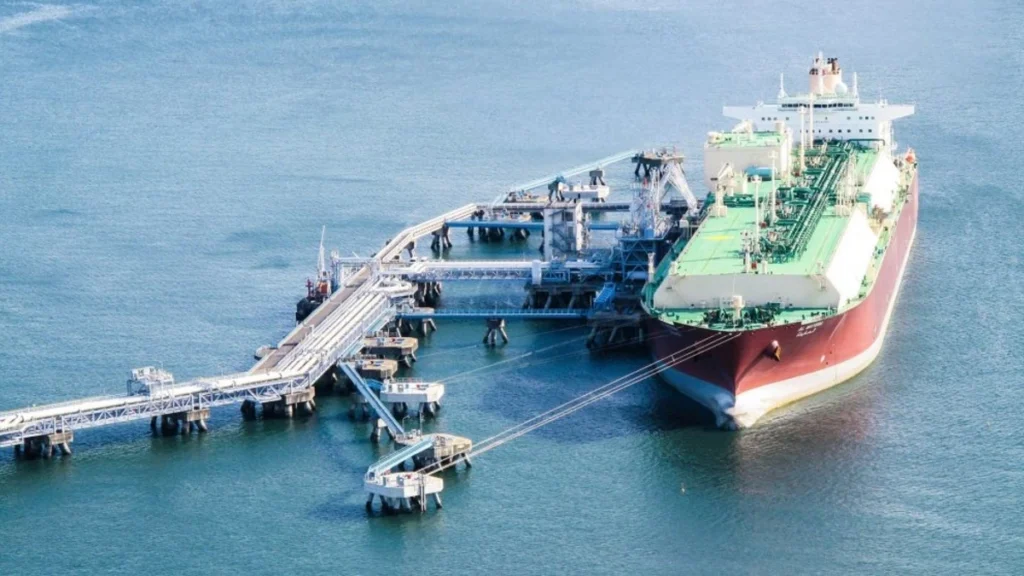
LNG is transported through specially designed ships known as LNG carriers. These ships maintain extremely low temperatures using advanced cryogenic tanks.
One of the world’s largest LNG hubs is located in Ras Laffan Industrial City in Qatar. From here, LNG is shipped globally through key routes like the Strait of Hormuz.
A famous LNG carrier, Mozah LNG Carrier, can carry up to 266,000 cubic meters of LNG in a single trip. When converted back to gas, this volume can supply energy to millions of households.
Loading and Safety Measures
Transporting LNG is a highly technical and sensitive process. It requires:
- Special cryogenic tanks with double-layer insulation
- Continuous monitoring of temperature and pressure
- Strict safety protocols to prevent leaks
Even a small leak can be hazardous, which is why LNG handling follows global safety standards.
India’s Dependence on LNG Imports
India has limited natural gas reserves and does not have large-scale LNG liquefaction facilities. As a result, it depends heavily on imports, meeting nearly 45–50% of its gas demand through LNG.
The country focuses more on regasification and distribution infrastructure to ensure steady supply for industries, households, and vehicles.
Global LNG Production Leaders
Only a few countries dominate LNG production, including:
- Qatar (largest exporter)
- Australia
- United States
- Russia
- Malaysia
These nations have massive gas reserves and advanced liquefaction plants, enabling them to supply LNG worldwide.
Why LNG Matters Today
LNG is considered a cleaner fuel compared to coal and oil. It plays a key role in reducing carbon emissions while meeting growing energy demands.
However, recent conflicts and attacks on energy infrastructure in West Asia have shown that LNG is not just a fuel—it is also a powerful geopolitical tool. Any disruption in supply can lead to sharp price increases and energy shortages.
Conclusion
From production in Qatar to fueling cars in India, LNG goes through a complex journey involving advanced technology and global logistics. Its conversion into CNG makes it accessible for everyday use, especially in transport.
As demand for cleaner energy rises, LNG will continue to play a vital role. However, ensuring stable supply chains and energy security will remain a major challenge in an increasingly uncertain world.