


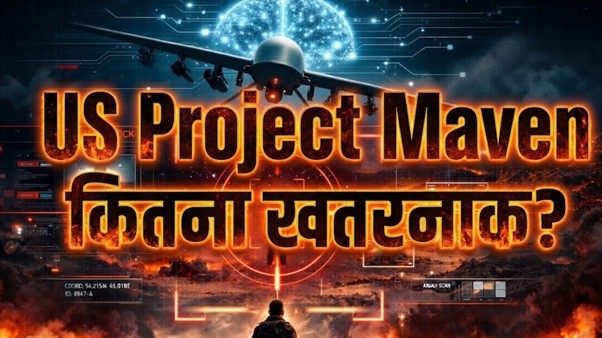
What Is Project Maven?
The Pentagon has been using artificial intelligence in military operations for several years. One of its most advanced programs is Project Maven, also known as the Algorithmic Warfare Cross-Functional Team.
Project Maven is an AI-based system designed to analyze massive amounts of surveillance data, including drone footage, satellite images, and videos. What once took human analysts hours or even days can now be processed in minutes using AI.
How AI Helps in Identifying Targets
Modern warfare relies heavily on data. During military operations, especially in regions like the Middle East, thousands of hours of drone and satellite data are generated. Analyzing this information manually is extremely difficult.
Project Maven uses machine learning to:
- Detect vehicles, weapons, and buildings
- Identify suspicious activities
- Highlight potential threats in real time
Instead of just displaying data, the system also provides recommendations. For example, if unusual activity is detected repeatedly in a specific area, the AI can flag it and suggest closer monitoring or action.
Faster Decisions in High-Stakes Situations
Recent geopolitical tensions have increased discussions around the use of AI in warfare. Reports suggest that the U.S. military has significantly improved its ability to identify and confirm targets quickly with the help of AI systems like Project Maven.
This means:
- Faster decision-making
- More precise strikes
- Reduced response time during critical missions
However, it’s important to note that AI does not make final decisions. Human commanders still have the authority to approve or reject any action.
Data-Driven Warfare: The New Reality
Today’s conflicts are increasingly being described as “data-driven wars.” Technologies like AI, drones, and satellites are now as important as tanks and fighter jets.
Project Maven plays a key role in:
- Real-time battlefield analysis
- Data fusion from multiple sources
- Supporting command and control systems
In rapidly changing environments, such as conflict zones in the Middle East, this technology provides a significant strategic advantage.
Ethical Concerns and Risks
Despite its benefits, Project Maven raises serious ethical and operational concerns.
Risk of Errors
If AI incorrectly identifies a target, the consequences can be severe. Even a small mistake in a war zone can lead to unintended casualties.
Accountability Issues
When machines assist in decision-making, questions arise about responsibility. Who is accountable if an AI-assisted strike goes wrong?
Ethical Debate
There is ongoing debate about whether machines should play a role in determining life-and-death outcomes. Critics argue that increasing reliance on AI could make warfare more dangerous.
Controversy with Tech Companies
Project Maven has faced backlash in the past. In 2018, employees at Google protested the company’s involvement in the project, leading to its withdrawal.
Later, companies like Palantir Technologies took over parts of the project. Despite criticism, the program continued to expand.
In 2023, Project Maven was officially recognized as a “program of record” and was moved under the National Geospatial-Intelligence Agency, marking its importance in U.S. defense strategy.
The Future of AI in Warfare
The United States believes that future wars will be won by those with superior data and AI capabilities. Project Maven is a key part of that vision.
Looking ahead:
- AI systems will become more advanced
- Military operations will rely even more on automation
- Human-AI collaboration will deepen
Final Thought
While AI is transforming warfare, one critical question remains:
Can we fully trust machines in life-and-death situations?
As technology continues to evolve, the balance between human judgment and artificial intelligence will define the future of global conflict.