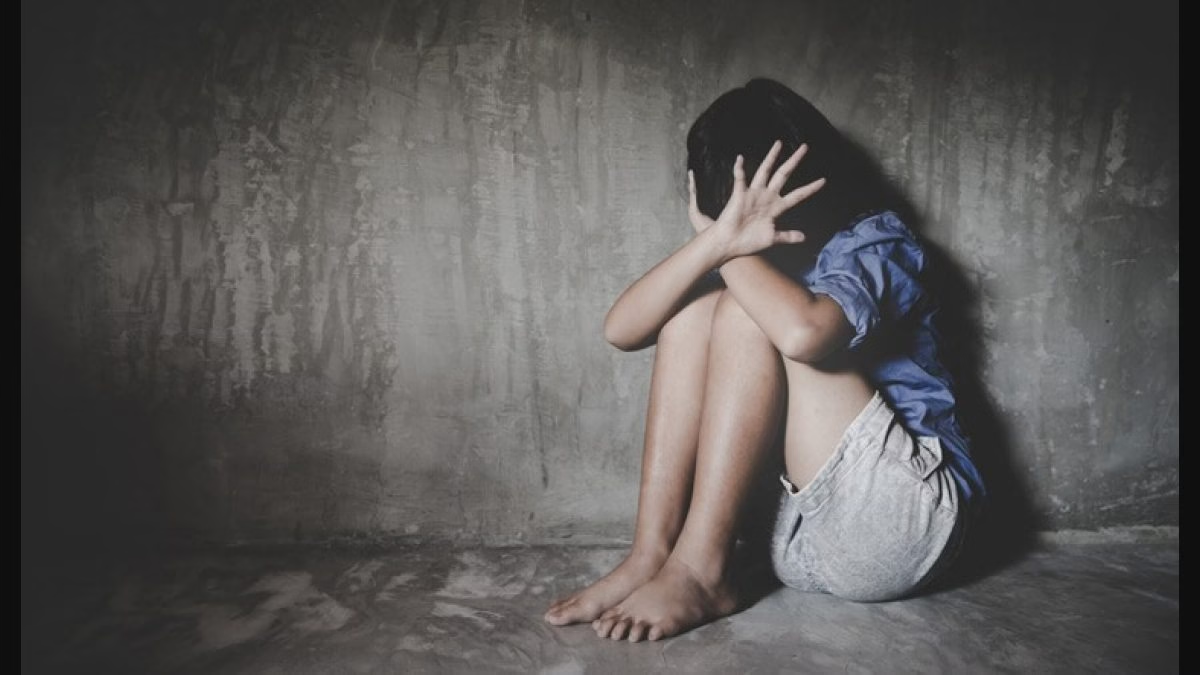
Shockwaves hit Karnataka’s education sector after Dr. Ashwin Hebbar, an associate professor at Shivamogga Institute of Medical Sciences (SIMS), was arrested on June 23, 2025, following sexual harassment allegations by a postgraduate student. The incident, which allegedly occurred during a professional dinner at a hotel, has exposed serious institutional lapses—especially since prior complaints against the professor had already been filed in 2022 but received no action.
This case has not only raised questions about the enforcement of India’s POSH (Prevention of Sexual Harassment) laws in educational settings but also highlighted how students are often forced to seek legal intervention due to internal committees’ failure to respond.
Timeline of Events
-
June 20, 2025: A postgraduate student lodged a complaint against Dr. Ashwin Hebbar from Shivamogga , detailing inappropriate behavior during a departmental dinner.
-
June 21, 2025: Despite the severity of the complaint, the college’s Internal Complaints Committee (ICC) did not take immediate action, prompting student unrest.
-
June 22, 2025: A protest erupted on the SIMS campus, demanding the professor’s suspension and police investigation.
-
June 23, 2025: Dr. Hebbar was arrested under Section 75(2) of the Bharatiya Nyaya Sanhita (BNS), 2023, and the Protection of Children from Sexual Offences (POCSO) Act due to the nature of the allegations and student age range.
The Education Department has also suspended Dr. Hebbar with immediate effect and ordered an internal inquiry.
Legal Context
The accused professor has been booked under:
-
Section 75(2) of BNS, 2023 – for sexual harassment at the workplace
-
Scheduled Castes and Scheduled Tribes (Prevention of Atrocities) Act – as the complainant belongs to a Scheduled Caste
-
POSH Act, 2013 – failure of the ICC to act effectively
Under these laws, the accused could face up to life imprisonment depending on the severity and nature of the findings.
Growing Concerns in Education Sector
According to NCRB 2022, there were over 48,655 cases of crimes against children, with nearly 15% reported from educational institutions. In Himachal Pradesh alone, such incidents saw a rise of 11% from 2019 to 2022.
The Shivamogga incident isn’t isolated. Activists have pointed to similar harassment cases in Paonta Sahib and Mandi in recent months, suggesting a pattern of institutional apathy.
Reactions and Protests
Student bodies including AIDWA, NSUI, and SFI staged a protest march on June 23 and submitted a memorandum to the Karnataka government demanding:
-
A reformed POSH committee with external female experts
-
Mandatory gender-sensitization training for all faculty
-
A state-wide audit of harassment complaints in educational institutions
One protester said, “If our own professors aren’t safe to be around, how can we focus on becoming doctors or healers?”
Psychological and Social Impact: A Deeper Wound Beyond the Incident
The arrest of Dr. Ashwin Hebbar not only brings legal scrutiny but has triggered a wave of psychological trauma and social unrest within the campus community. For the victim, the alleged harassment can lead to long-term emotional distress. Research published in the Indian Journal of Psychiatry suggests that survivors of workplace sexual harassment often face post-traumatic stress disorder (PTSD), anxiety, depression, and diminished academic performance, particularly when the accused holds a position of authority.
Ongoing Investigation
Dr. Hebbar remains in police custody until June 25, 2025. The police are currently:
-
Recording statements from the 24 complainants
-
Reviewing hotel CCTV footage
-
Investigating the college’s 2022 complaint records
The Director of School Education has asked for a comprehensive report by June 30, including testimonies from students, staff, and college officials.
What’s Next?
This incident may lead to broader changes:
-
Mandatory compliance checks of POSH implementation across Karnataka
-
Stronger legal accountability for internal committees
-
Centralized reporting portal for students across all Indian institutions
Takeaway
The Shivamogga incident is more than just a criminal case—it’s a wake-up call for India’s academic institutions. It highlights the urgent need for transparency, accountability, and student safety mechanisms. If not addressed now, the credibility of India’s higher education system risks lasting damage.


2 thoughts on “Shockwaves in Shivamogga: SIMS Medical Professor Arrested for Sexual Harassment After Students’ Protest”