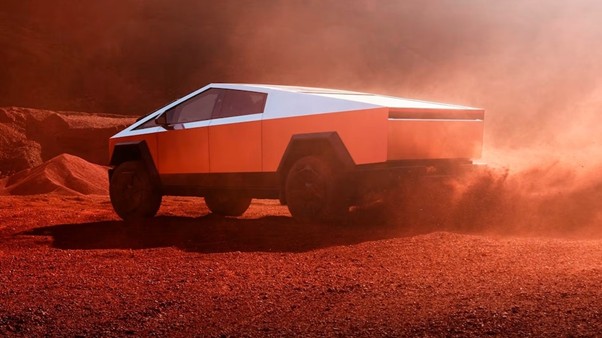
A Tesla Cybertruck accident in Houston, Texas, has sparked a lawsuit against the electric car maker after a woman claimed that the vehicle’s Full Self-Driving (FSD) feature malfunctioned, nearly causing her car to fall off a bridge. The incident, which occurred in August 2025, has raised concerns about Tesla’s self-driving technology and its safety claims.
The Accident
According to court documents, the woman was driving her Tesla Cybertruck with her one-year-old child in the back seat when the accident occurred. The vehicle was supposed to take a right turn on a Y-shaped overpass, but the self-driving system failed to respond correctly.
Dashcam footage from the incident shows the Cybertruck moving straight instead of turning, crashing into a barrier and narrowly avoiding falling off the bridge. Parts of the vehicle were reportedly lifted into the air during the collision.
The woman suffered serious injuries to her right shoulder, neck, and back. Fortunately, her child was unharmed.
Lawsuit Details
The victim has filed a lawsuit against Tesla Inc., claiming that the company misrepresented the self-driving capabilities of the Cybertruck. The case demands $1 million in damages.
The plaintiff’s attorney alleges that the Full Self-Driving system was designed and marketed recklessly, putting users at risk. The lawsuit argues that the system failed without warning, leaving the driver unable to regain control in time to prevent the accident.
Full Self-Driving Under Scrutiny
Tesla CEO Elon Musk has frequently promoted the Full Self-Driving (FSD) feature as a major advancement in autonomous driving. However, this accident highlights potential limitations of the technology.
Safety experts note that while FSD is marketed as “full autonomy,” it still requires active driver supervision. Incidents like this raise questions about the gap between Tesla’s advertising and the real-world performance of self-driving systems.
Dashcam Footage Reveals the Event
The recently released dashcam video provides a clear view of the moments leading up to the crash. The Cybertruck’s speed made it impossible for the driver to correct the course manually. The footage confirms that the vehicle failed to respond to the road layout, resulting in the collision with the barrier.
Implications for Tesla
This lawsuit could have significant implications for Tesla’s self-driving claims and liability policies. With FSD being one of Tesla’s flagship features, any failure can affect both consumer trust and regulatory scrutiny.
Legal analysts suggest that if the court finds Tesla negligent in its FSD design or marketing, it could lead to stricter safety regulations and oversight for autonomous driving technology.
Conclusion
The Tesla Cybertruck crash underscores the potential risks of relying on semi-autonomous driving features. While Tesla continues to innovate with its Full Self-Driving system, incidents like this highlight the importance of clear communication about the limitations of autonomous technology.
As the lawsuit progresses, both Tesla owners and the broader automotive industry will be watching closely, raising awareness about the safety and reliability of self-driving cars in real-world scenarios.