


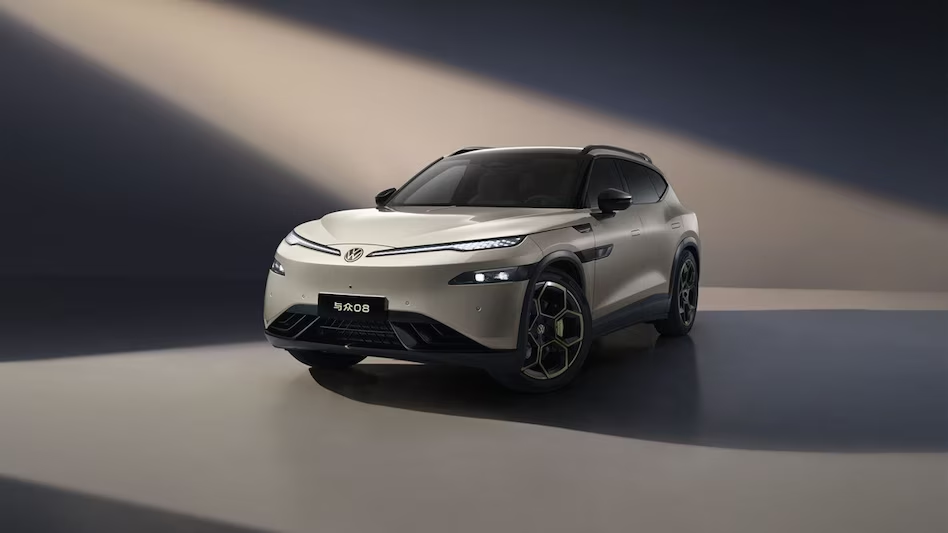
The Chinese car market has seen a significant shift in early 2026, with German automaker Volkswagen regaining its position as the top-selling car brand. This comes after Chinese brands like BYD and Geely had dominated the market in the past few years. Volkswagen has managed to surpass these local competitors, including Geely and BYD, making a strong comeback in China’s competitive automotive market.
Volkswagen’s Comeback in China’s Car Market
Volkswagen’s performance in early 2026 has been impressive, as the company has overtaken major Chinese brands like Geely and BYD to reclaim the top spot in China’s car market. According to the latest reports, Volkswagen has sold the highest number of cars in China, with a market share of 13.9%. This marks a strong recovery after losing ground to local players in 2024 and 2025.
Volkswagen’s strong position is due to its collaboration with local Chinese companies such as FWA and SAIC in joint ventures, which has helped the brand continue to cater to Chinese consumers effectively. Volkswagen’s dominance in China highlights the resilience and strength of foreign brands, even in a market traditionally dominated by local players.
Geely and Toyota: Close Competitors to Volkswagen
Following Volkswagen, Chinese carmaker Geely holds the second position in the market with a share of 13.8%, showing that the gap between Volkswagen and Geely is narrow. Toyota, a global automaker with a strong presence in China, has seen its market share grow to 7.8% in early 2026, further solidifying its position in the market.
BYD, which was the top-selling car brand in China in 2024 and 2025, has seen a drop in sales in early 2026, now holding a market share of 7.1%. Despite this decline, BYD continues to lead the global market, maintaining its position as one of the top-selling brands worldwide.
BYD Faces Decline in Sales Post-COVID
BYD, the Chinese electric vehicle (EV) giant, experienced a sharp decline in sales in February 2026, marking the company’s weakest sales performance since the COVID-19 pandemic. In 2024, BYD had overtaken Volkswagen in China, but the company has faced challenges in early 2026. In February 2026, BYD’s sales fell significantly by around 34% compared to the previous year.
The decline in BYD’s sales can be attributed to several factors, including a reduction in government subsidies for new energy vehicles (NEVs), which had previously boosted sales. The introduction of a 5% tax on NEVs in late 2025 further contributed to this slump. The Chinese government had earlier been offering a 10% subsidy for EVs, making these vehicles more affordable for consumers.
New Tax Hurting Chinese EV Market
The new 5% tax imposed on NEVs has had a significant impact on the Chinese car market, especially on electric vehicles and plug-in hybrids. According to the China Passenger Car Association (CPCA), the sales of cars in China dropped by 26% in early 2026, with February witnessing the sharpest decline at 34%. In February 2026, approximately 950,000 cars were sold, compared to higher numbers in previous years.
Cui Dongshu, the general secretary of CPCA, explained that consumers are now showing a preference for strong hybrid cars, which were previously less popular compared to plug-in hybrid vehicles. The reduction in government subsidies has hit affordable EVs and plug-in hybrids the hardest. As government support decreases, the demand for cheaper, traditional vehicles has increased.
Impact of Subsidy Cuts on the EV Market
The reduction in subsidies is a significant shift for the Chinese EV market. Many consumers had been purchasing electric and plug-in hybrid vehicles due to attractive government incentives. With the subsidy cuts, there has been a noticeable shift in consumer preferences, with hybrid vehicles gaining more attention. The shift in market dynamics is affecting companies like BYD, which has been primarily focused on electric and plug-in hybrid vehicles.
Conclusion: A Changing Market Landscape
The early months of 2026 have brought a dramatic change to China’s car market. Volkswagen’s comeback as the top-selling brand is a testament to the enduring strength of foreign brands in China’s highly competitive market. At the same time, the introduction of new taxes and the reduction in government subsidies for electric vehicles have created challenges for Chinese automakers like BYD and Geely. As the market continues to evolve, it will be interesting to see how the dynamics shift and whether foreign or local brands will dominate in the long run.