Air conditioners are essential during summer, but many users get confused when their AC suddenly stops releasing water. While water dripping from an AC is normal, a complete stop or unusual leakage can indicate a technical issue that needs attention.
Why Does an AC Release Water?
An air conditioner does not create water. Instead, it removes moisture from the air. When warm and humid air enters the AC unit, it passes over cold coils. This causes condensation, turning moisture into water.
This process is called condensation. The collected water flows into a drain tray and exits through a drain pipe. So, if your AC is releasing water, it is usually a sign that the system is working properly.
What If Your AC Stops Dripping Water?
If your AC suddenly stops releasing water or starts leaking water inside the room, it may indicate a problem. Some of the most common reasons include:
1. Blocked Drain Pipe
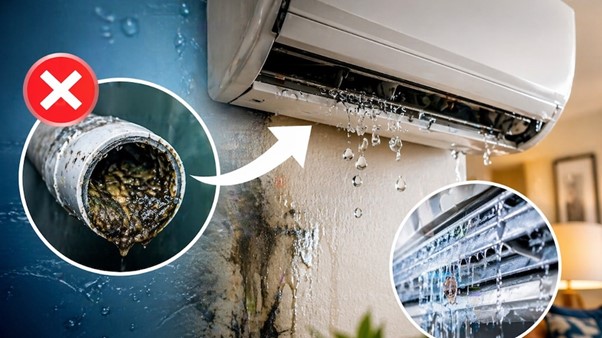
Dust, algae, and dirt can accumulate in the drain pipe over time. When the pipe gets blocked, water cannot flow out and starts accumulating inside the unit. Eventually, it may leak inside the room or along walls.
2. Dirty Air Filter
A clogged filter restricts airflow. This can cause the cooling coils to become excessively cold and form ice. When the ice melts, it creates excess water that the drainage system cannot handle.
3. Low Refrigerant Gas
Low gas levels can reduce cooling efficiency. This may also cause ice formation on coils, leading to sudden water leakage when the ice melts.
4. Installation Issues
If the AC is not installed at the correct angle, water may not flow properly into the drain pipe. Instead, it can flow backward and leak inside the room.
5. Damaged Drain Pan or Insulation
A cracked or rusted drain pan can allow water to leak directly. Similarly, poor insulation on copper pipes can lead to condensation and water dripping inside walls.
Signs That Your AC Has a Water Problem
You should watch out for the following warning signs:
- No water coming from the outdoor drain pipe
- Water dripping inside the room
- Wet walls near the AC unit
- Reduced cooling performance
- Ice formation on AC coils
Simple DIY Checks You Can Do
Before calling a technician, you can perform a few basic checks:
Check the Drain Pipe
Ensure water is flowing outside. If not, there may be a blockage. Gently clean the pipe or clear it using low air pressure.
Clean the Air Filter
Remove the filter and clean it thoroughly. A clean filter improves airflow and prevents coil freezing.
Inspect for Ice Formation
If you see ice inside the AC unit, turn it off immediately. This usually indicates airflow or gas-related issues.
Check Cooling Performance
If the AC is not cooling properly, it may require professional servicing.
When to Call a Technician
You should contact a professional if:
- Water is leaking inside the room
- Ice keeps forming repeatedly
- Cooling has dropped significantly
- You suspect gas leakage or low refrigerant
Ignoring these issues can damage internal components and increase repair costs.
Why Timely Maintenance Is Important
Regular maintenance helps prevent AC water problems. Cleaning filters, checking drainage systems, and servicing the unit once or twice a year can ensure smooth performance.
Proper maintenance also prevents:
- Mold and fungus growth
- Wall damage due to moisture
- Reduced cooling efficiency
- Higher electricity consumption
Conclusion
Water dripping from an AC is normal, but only when it flows out properly through the drainage system. If water stops or starts leaking inside, it is a clear sign of a problem.
With simple cleaning, regular maintenance, and timely inspection, you can keep your air conditioner running efficiently and avoid costly repairs.