Introduction
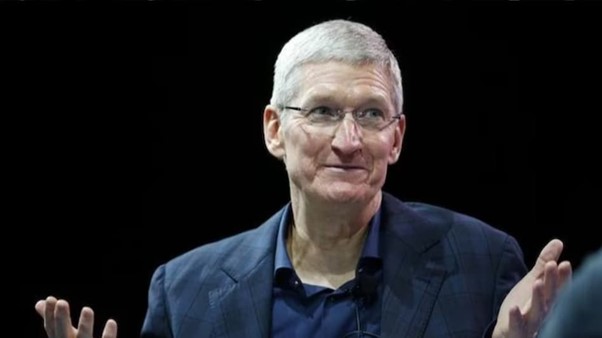
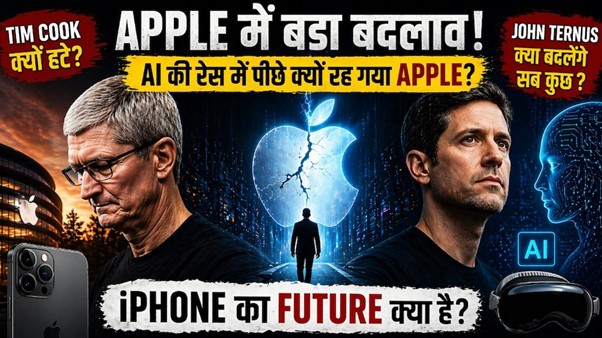
A major leadership change has taken place at Apple as Tim Cook steps down after nearly 15 years as Chief Executive Officer. He will be replaced by John Ternus, marking one of the most important transitions in the company’s modern history.
While the move may appear like a routine leadership shift, industry experts believe it reflects deeper strategic challenges, especially in the fast-growing field of artificial intelligence (AI).
Tim Cook’s Legacy at Apple
Tim Cook took over as CEO in 2011 after the health-related resignation of Steve Jobs. At that time, many questioned whether Apple could maintain its momentum.
However, Cook successfully transformed Apple into one of the world’s most valuable companies. Under his leadership, Apple expanded the global reach of the iPhone, strengthened its supply chain, and built a strong services business including Apple Music, iCloud, and the App Store.
His leadership focused heavily on stability, efficiency, and consistent profits.
Why Tim Cook Stepped Down
The official explanation focuses on a planned leadership transition, but several industry factors are believed to have influenced the decision.
1. Shift Toward Artificial Intelligence
The biggest factor is the global shift toward AI. Companies like OpenAI, Google, and Microsoft are rapidly advancing AI systems that can think, generate content, and automate complex tasks.
In comparison, Apple has been seen as slower in this race. While competitors aggressively integrate AI into their ecosystems, Apple has taken a more cautious approach.
Apple’s AI Challenge
Apple’s voice assistant, Siri, was once considered revolutionary. However, in recent years, it has fallen behind more advanced AI systems.
Even Apple’s recent AI features have received mixed reactions, with many users expecting more advanced capabilities similar to those offered by competitors.
This gap has created pressure on Apple to rethink its innovation strategy.
From Innovation Leader to Stability-Focused Company
During Tim Cook’s era, Apple became extremely successful in terms of revenue and market value. However, critics say the company shifted focus from bold innovation to improving existing products.
While devices became more refined, Apple introduced fewer groundbreaking products compared to its earlier years under Steve Jobs.
This shift is believed to be one of the key reasons for leadership restructuring.
Why John Ternus Was Chosen
John Ternus, who has worked at Apple for over 25 years, currently leads the company’s hardware engineering division.
He has played an important role in developing major Apple products, including iPhones, Macs, and newer hardware systems.
His background suggests a stronger focus on product innovation, hardware design, and next-generation technology—areas where Apple is expected to compete more aggressively in the coming years.
What This Means for Apple’s Future
1. Stronger Push in AI
Apple is expected to accelerate its AI strategy. Future versions of Siri and other Apple services may become more intelligent, interactive, and personalized.
2. New Product Innovation
Products like Apple Vision Pro show Apple’s interest in mixed reality and new computing platforms. Future devices may combine AI, augmented reality, and wearable technology.
3. iPhone Evolution
The iPhone remains Apple’s biggest revenue driver, but its growth has slowed. Future upgrades are expected to focus more on AI integration rather than just hardware improvements.
A Turning Point for Apple
The transition from Tim Cook to John Ternus is not just a leadership change—it marks a strategic shift.
Apple is entering a new phase where innovation, AI development, and product reinvention will be crucial for staying competitive.
Conclusion
Tim Cook’s departure reflects more than just a retirement decision. It highlights a broader transformation in the tech industry driven by artificial intelligence.
As Apple moves forward under new leadership, the company faces a major challenge: balancing its legacy of stability with the need for bold innovation in an AI-driven future.