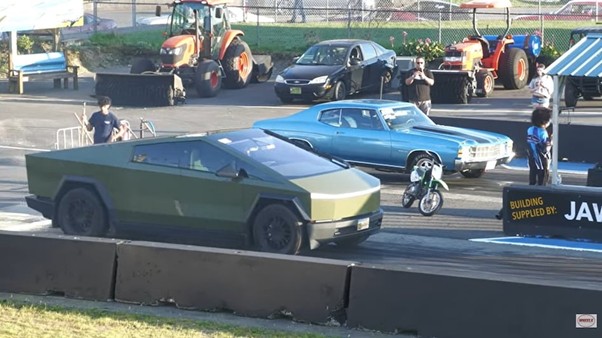
A surprising drag race result is making headlines after a modified classic car defeated one of the most advanced electric vehicles on the market. In a head-to-head race, the Tesla Cybertruck lost to a heavily modified Chevrolet Chevelle Malibu 1970, proving that raw power and quick response can still challenge modern technology.
A Race Between Two Different Eras
The race, which is now circulating widely on YouTube, showcased a clash between old-school engineering and futuristic EV performance. On one side was Tesla’s Cybertruck, known for its cutting-edge design and powerful electric drivetrain. On the other was a 1970 Chevrolet Chevelle Malibu—an iconic American muscle car that had been significantly modified for performance.
Cybertruck’s Powerful Setup
The Cybertruck featured in the race was the high-performance “Cyberbeast” variant. This version comes with a tri-motor setup capable of producing around 845 horsepower. Tesla promotes the Cybertruck as a high-speed, high-performance electric pickup, and it has demonstrated impressive acceleration in previous tests.
Modified Muscle Car Brings the Heat
The Chevrolet Chevelle Malibu in the race was not stock. It had been upgraded with performance modifications, including wider tires and aftermarket wheels designed for better grip and traction.
While exact engine details were not disclosed, the original 1970 model came with a large V8 engine, often a 7.4-liter big block. With modern tuning and modifications, such engines can easily produce between 500 and 600 horsepower—or even more depending on the setup.
What Happened During the Race?
At the start, many expected the Cybertruck to dominate due to its instant electric torque. However, the outcome told a different story.
As soon as the race began, the Chevelle Malibu reacted faster off the line. This quick launch gave the classic car an early advantage. Throughout most of the race, the Chevelle maintained its lead, not giving the Cybertruck a clear chance to overtake.
Midway through the race, the Cybertruck began to close the gap and showed its true performance capabilities. It nearly caught up, making the race more competitive and preventing a one-sided result.
However, in the final stretch, the Chevelle held onto its lead and crossed the finish line first, winning by a small margin.
Why Did the Classic Car Win?
The result may seem surprising, but there are a few key reasons behind it:
- Faster reaction time: The Chevelle had a quicker launch at the start
- Optimized modifications: Performance upgrades improved grip and acceleration
- Lightweight advantage: Older muscle cars can sometimes be lighter than modern EVs
Meanwhile, although the Cybertruck is powerful, its weight and traction control systems may have affected its initial acceleration in this particular race.
Final Thoughts
This unexpected outcome shows that while electric vehicles like the Tesla Cybertruck represent the future, classic muscle cars still have a place in high-performance racing—especially when modified.
The race highlights that performance is not just about technology, but also about tuning, reaction time, and real-world conditions. For car enthusiasts, it was a thrilling reminder that sometimes, old-school machines can still outperform modern giants.

One Comment